
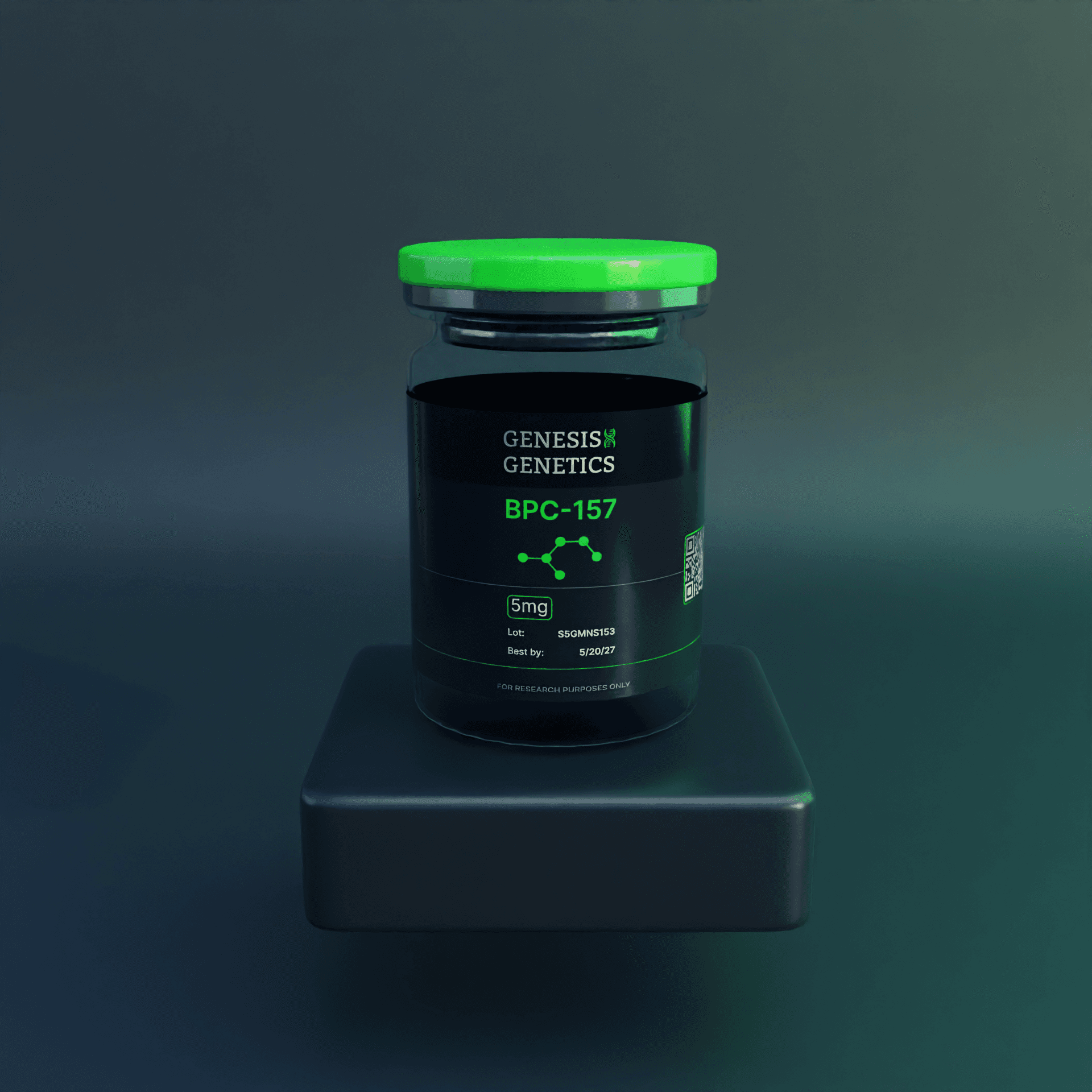
BPC-157
Also known as: Body Protection Compound 157, PL 14736
BPC-157 (Body Protection Compound 157) is a synthetic pentadecapeptide derived from a protective protein found in gastric juice. Research literature documents its effects on angiogenesis, tissue repair, and gut epithelial integrity.
Sequence
Gly-Glu-Pro-Pro-Pro-Gly-Lys-Pro-Ala-Asp-Asp-Ala-Gly-Leu-Val
Length
15 amino acids
Molecular Weight
1,419.5 Da
Origin
Derived from human gastric juice protein
Stability
Stable in aqueous solution; gastric acid resistant
Research Use Only
Not for human or veterinary use
Overview
BPC-157 is a 15-amino-acid peptide sequence derived from a larger protein isolated from human gastric juice. Its systematic name, Body Protection Compound 157, reflects the protective properties observed in early gastric physiology research. Unlike endogenous gastric peptides that function locally, BPC-157 has been studied for systemic effects in animal models across multiple organ systems.
Research published over the past three decades has examined BPC-157 in the context of wound healing, angiogenesis, and gastrointestinal mucosal repair. Studies in rodent models have documented accelerated closure of cutaneous wounds, tendon-to-bone repair, and intestinal anastomosis healing. The compound appears to upregulate growth factor expression, including VEGF and EGF receptor signaling, which investigators have proposed as a mechanism for its observed pro-regenerative effects.
A notable feature of BPC-157 in preclinical research is its stability in aqueous solution and apparent resistance to degradation in the gastric environment — properties that make it a useful research tool for studying mucosal protection pathways. It has been investigated in models of NSAID-induced gastric lesions, inflammatory bowel models, and intestinal fistula repair, with consistent findings of accelerated mucosal restitution.
All published research on BPC-157 has been conducted in vitro or in animal models. The compound is not approved for human therapeutic use and is sold strictly for laboratory and research applications. Researchers working with BPC-157 should review current literature on its receptor interactions with the NO-cGMP pathway and its influence on FAK-paxillin signaling, which are areas of active mechanistic investigation.
Mechanism of Action
BPC-157 does not bind a single well-characterized receptor. Current research points to interaction with the nitric oxide (NO) system — specifically, modulation of eNOS activity and downstream cGMP signaling — as a central mechanistic pathway. In endothelial cell cultures, BPC-157 has been shown to promote tube formation and VEGFR2 phosphorylation, consistent with a pro-angiogenic role.
At the intracellular level, investigators have reported BPC-157-associated changes in FAK (focal adhesion kinase) and paxillin phosphorylation, suggesting effects on cytoskeletal organization relevant to cell migration during wound closure. Research has also identified interactions with the dopaminergic and serotonergic systems in CNS-related studies, though these pathways remain less characterized than the peripheral tissue-repair literature.
Research Applications
- Gastrointestinal mucosal repair and gut epithelial integrity models
- Tendon-to-bone repair and musculoskeletal wound healing studies
- Angiogenesis and VEGF pathway research
- Nitric oxide system modulation studies
- Inflammatory bowel disease animal models
- Neuroprotection and CNS recovery models (emerging research area)
Research Use Only. BPC-157 is available for laboratory and research applications only. It is not approved by the FDA or any equivalent regulatory authority for human or veterinary therapeutic use. All information on this page is derived from published preclinical literature and is presented for informational and research context purposes only. Investigators should consult current primary literature and comply with applicable regulations before initiating research.
Order BPC-157 for Research →Peptide Family
Tissue Repair Peptides
Structural Protein Synthesis · Angiogenesis · Wound Healing
All Compound Research Overviews