
Retatrutide
Also known as: LY3437943, Triple G Agonist
Retatrutide (LY3437943) is a triple agonist of GLP-1, GIP, and glucagon receptors under active clinical development by Eli Lilly. Phase II trial data shows significant body weight reduction in obese adults. Available for research.
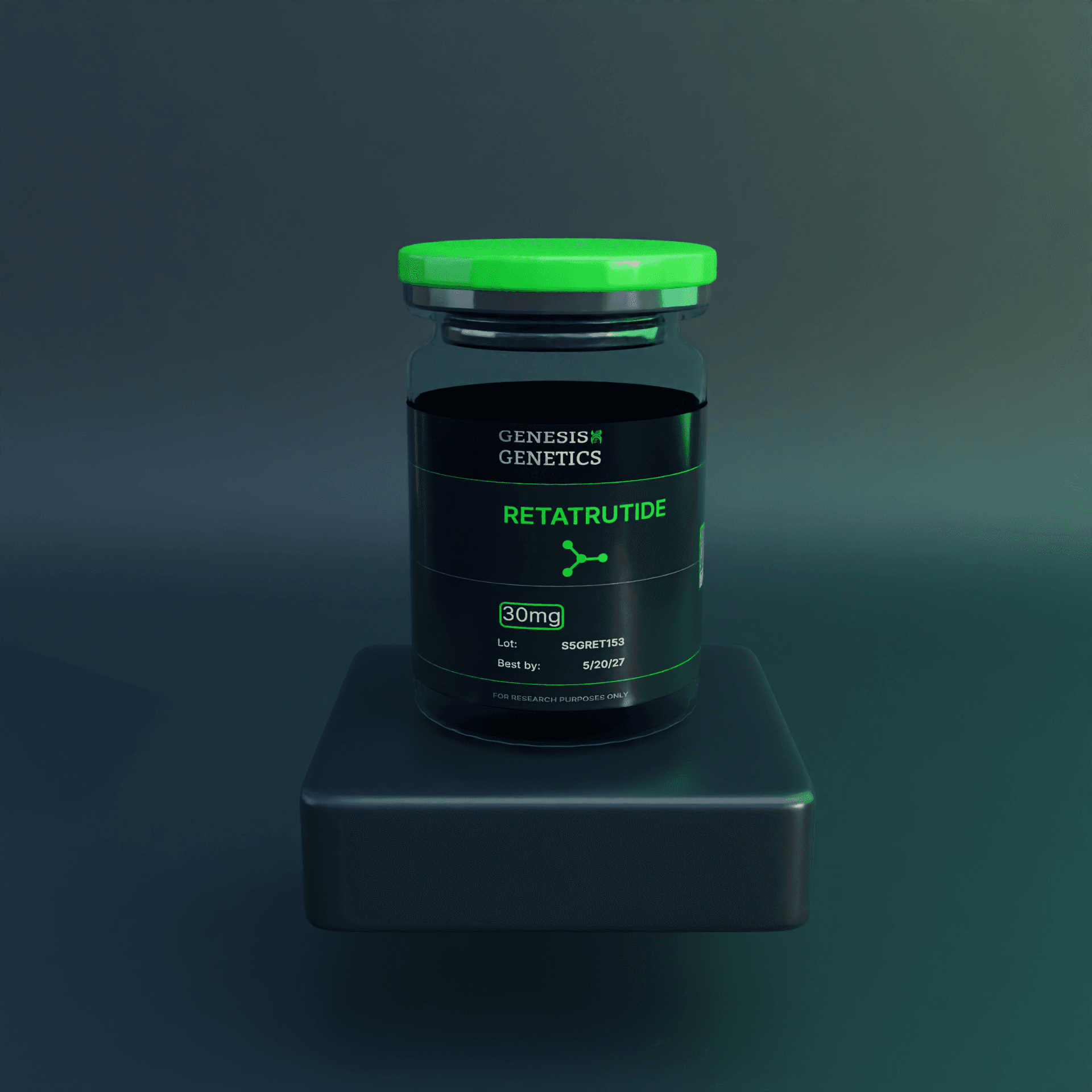
Developer
Eli Lilly and Company (LY3437943)
Receptor Targets
GLP-1R, GIPR, GCGR (triple agonist)
Clinical Stage
Phase III (as of 2024)
Phase II Weight Loss
~17–24% body weight reduction at 48 weeks
Half-Life
~6 days (fatty acid modification)
Research Use Only
Not for human or veterinary use
Overview
Retatrutide (LY3437943) is a synthetic peptide developed by Eli Lilly and Company that acts as a co-agonist at three G-protein coupled receptors involved in metabolic regulation: the glucagon-like peptide-1 receptor (GLP-1R), glucose-dependent insulinotropic polypeptide receptor (GIPR), and glucagon receptor (GCGR). This triple agonism profile distinguishes it from dual GLP-1/GIP agonists such as tirzepatide and single GLP-1 agonists such as semaglutide, and has generated significant scientific interest.
The clinical data on retatrutide represent some of the most striking weight reduction results reported for any pharmacological agent to date. Phase II trial results published in 2023 in the New England Journal of Medicine reported mean body weight reduction of approximately 17-24% at 48 weeks in adults with obesity, exceeding results reported for tirzepatide at comparable timepoints. The addition of glucagon receptor agonism is hypothesized to contribute to this enhanced weight loss through increased energy expenditure and hepatic glycogenolysis.
From a research perspective, retatrutide is particularly valuable for studying the combined effects of incretin hormones on metabolic physiology. The three receptor systems it activates — GLP-1R, GIPR, and GCGR — each play distinct but interacting roles in glucose homeostasis, energy balance, and lipid metabolism. Research with retatrutide allows investigators to probe the synergistic or additive interactions between these pathways in experimental models.
Retatrutide is currently in Phase III clinical trials and is not approved for human therapeutic use. It is available for preclinical research applications where investigators are studying GLP-1, GIP, or glucagon receptor pharmacology, metabolic disease models, or the comparative pharmacology of incretin-based compounds.
Mechanism of Action
Retatrutide's GLP-1R agonism drives glucose-dependent insulin secretion, reduces glucagon release, slows gastric emptying, and promotes satiety through CNS signaling. The GIPR component contributes incretin-mediated insulin secretion and may also attenuate the nausea associated with GLP-1R agonism when combined. The glucagon receptor agonism increases hepatic glucose production and energy expenditure through cAMP-mediated stimulation of thermogenic pathways.
The net metabolic effect of simultaneous activation of all three receptors appears to be additive or synergistic for weight reduction, with animal studies demonstrating greater fat mass loss than would be predicted from each receptor's individual contribution. The exact molecular basis for this synergy — including potential interactions at the receptor expression level and downstream cross-talk between cAMP signaling cascades — remains an active area of investigation.
Research Applications
- GLP-1/GIP/Glucagon triple receptor pharmacology
- Metabolic disease and obesity animal models
- Comparative incretin biology and receptor synergy studies
- Hepatic glucose production and glucagon signaling research
- Energy expenditure and thermogenesis models
- Novel incretin drug mechanism research
Research Use Only. Retatrutide is available for laboratory and research applications only. It is not approved by the FDA or any equivalent regulatory authority for human or veterinary therapeutic use. All information on this page is derived from published preclinical literature and is presented for informational and research context purposes only. Investigators should consult current primary literature and comply with applicable regulations before initiating research.
Order Retatrutide for Research →Peptide Family
GLP-1 Analogs & Incretin Compounds
GLP-1R · GIPR · GCGR · Incretin Biology · Metabolic Research
All Compound Research Overviews