
Neuropeptides & CNS Research Compounds
BDNF · Melanocortin Receptors · Neuroprotection · Neuroinflammation
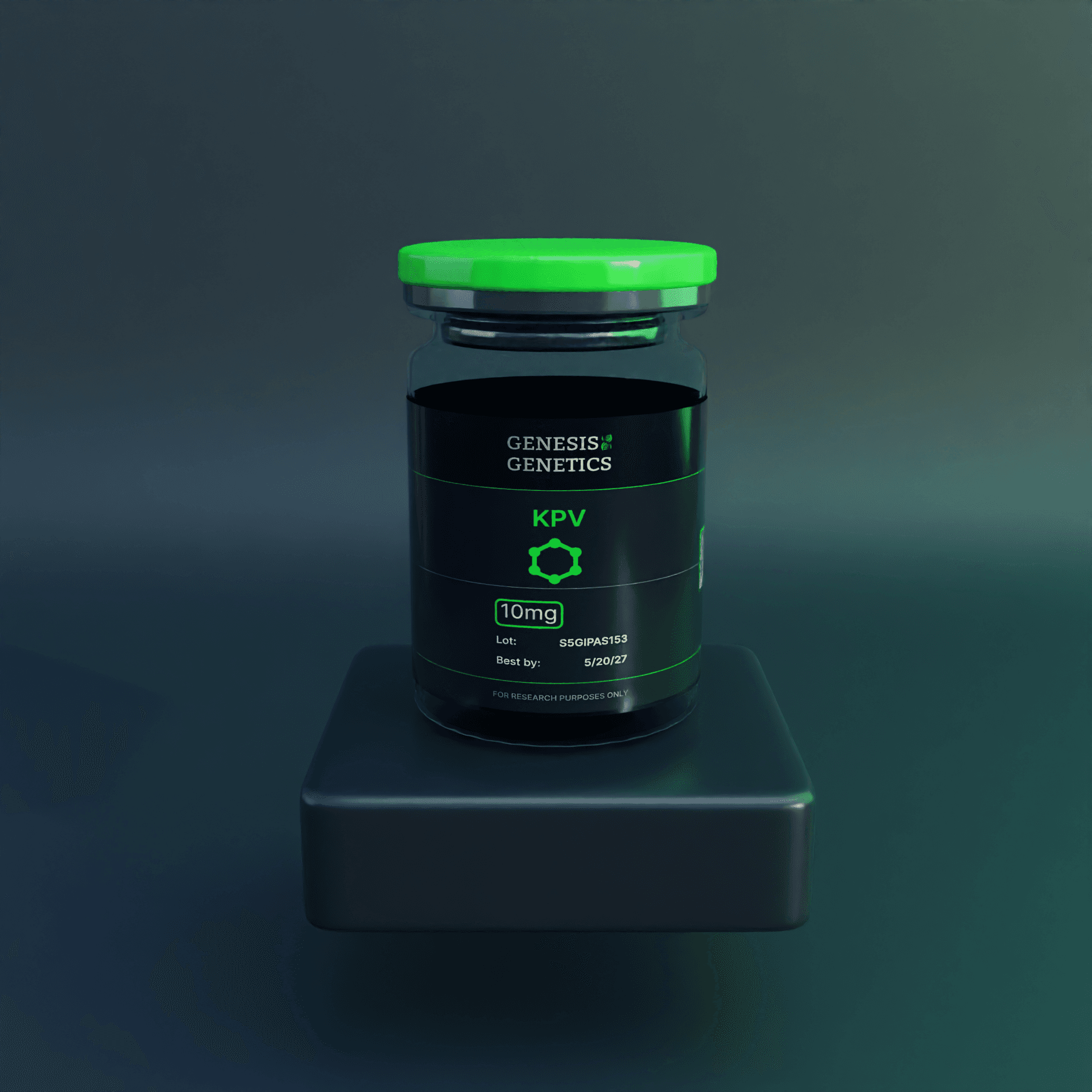
The neuropeptide and CNS research compound family at Genesis Genetics groups compounds whose primary research applications involve the central or peripheral nervous system, neuroinflammation, and neuroprotection. This family includes Semax (an ACTH-derived BDNF-stimulating heptapeptide), KPV (the anti-inflammatory C-terminal tripeptide of α-MSH), and ARA-290 (cibinetide, a selective Innate Repair Receptor agonist originally derived from the EPO structure).
Compounds in This Family

Overview
Despite their different molecular origins, these three compounds converge on overlapping areas of research interest. All three have documented anti-inflammatory properties relevant to neuroinflammation. Semax and ARA-290 have both been studied in models of nerve damage and neuropathy. KPV and Semax both modulate melanocortin receptor pathways — Semax through its ACTH-derived sequence and KPV as a direct α-MSH fragment — making their co-study informative for understanding melanocortin biology in the gut and CNS.
Investigators in neuroinflammation research, neuroprotection models, peripheral neuropathy studies, and neurotrophic factor biology will find these compounds useful for different aspects of the same experimental questions. Semax provides strong BDNF-induction capability. ARA-290 provides selective IRR/EPO receptor biology without hematopoietic confounds. KPV provides gut-stable, MC receptor-mediated anti-inflammatory activity in GI and systemic contexts.
Research Themes
BDNF and Neurotrophic Factor Research
Semax's most robustly documented preclinical effect is stimulation of BDNF and NGF expression in the hippocampus and frontal cortex following systemic or intranasal administration in rodents. BDNF's role in synaptic plasticity, long-term potentiation, memory consolidation, and neuroprotection against excitotoxicity makes Semax a valuable tool for studying how increasing endogenous BDNF levels affects cognitive function and neuronal survival in experimental models.
Melanocortin Receptor-Mediated Anti-Inflammation
KPV and Semax both interact with melanocortin receptor systems that mediate anti-inflammatory signaling. KPV (the C-terminal tripeptide of α-MSH) acts primarily through MC1R and MC3R, suppressing NF-κB activation and reducing pro-inflammatory cytokine production in intestinal epithelial and immune cells. Semax modulates these same receptors to a lesser degree through its ACTH-derived sequence. Research comparing these compounds enables study of α-MSH's anti-inflammatory properties with different receptor selectivity profiles.
Innate Repair Receptor Biology and Neuropathy
ARA-290's selective activation of the EPOR/βCR Innate Repair Receptor provides a unique research tool for studying the tissue-protective arm of EPO signaling without the hematopoietic effects of erythropoietin itself. This is particularly relevant for peripheral neuropathy research, where IRR expression on small sensory fibers has been documented and where clinical data from sarcoidosis-related neuropathy trials has shown measurable changes in corneal nerve fiber density — a validated structural endpoint for small fiber neuropathy assessment.
Compound Research Overviews
Frequently Asked Questions
Is Semax the same as Selank?+
No. Semax and Selank are distinct synthetic peptides from the same Russian research tradition. Semax is derived from ACTH(4-7) with a C-terminal PGP extension; its primary documented effects are BDNF upregulation and neuroprotection. Selank is derived from the immunomodulatory peptide tuftsin with additional stabilizing residues; its primary documented effects involve anxiolytic activity and GABA system modulation. They are sometimes studied together but are separate compounds.
What is the Innate Repair Receptor and why does ARA-290 target it?+
The Innate Repair Receptor (IRR) is a heterodimer of the erythropoietin receptor (EPOR) and the beta-common receptor (βCR). It is expressed on non-hematopoietic tissues including neurons, macrophages, and endothelial cells. ARA-290 was engineered to bind this heterodimer selectively without activating the EPOR homodimer, which drives red blood cell production. This selectivity allows study of EPO's tissue-protective signaling independently of its hematopoietic effects.
How does KPV protect the gut mucosa?+
KPV's gut-protective effects involve direct anti-inflammatory signaling on intestinal epithelial cells through MC1R and MC3R receptors, leading to cAMP elevation and NF-κB pathway inhibition. This reduces production of pro-inflammatory cytokines (TNF-α, IL-6, IL-1β) and adhesion molecules (ICAM-1) in the intestinal wall. KPV also appears to promote tight junction protein expression, potentially contributing to epithelial barrier integrity in colitis models.
Research Use Only. All compounds in the Neuropeptides & CNS Research Compounds family are sold for laboratory and research applications only and are not approved for human or veterinary therapeutic use. Information presented on this page is derived from published preclinical and clinical research literature and is provided for educational and scientific context only.
Other Peptide Families